
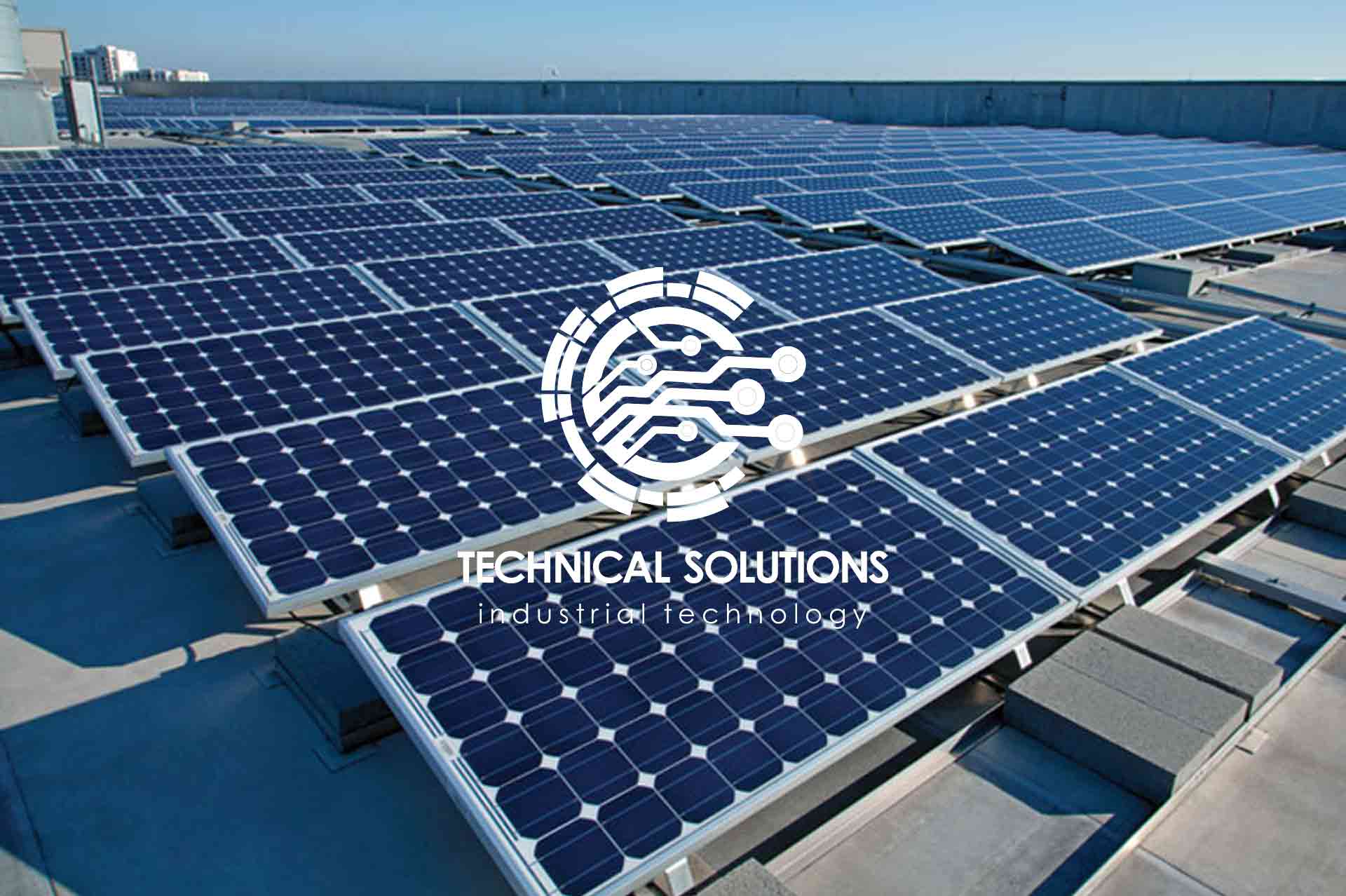
PV Systems EPC
Technical Solutions provides full Engineering, Procurement, and Construction (EPC) services for solar photovoltaic systems. Our EPC delivery model offers clients a single point of responsibility for the entire project — from initial design through commissioning and handover — reducing coordination risk and ensuring consistent quality throughout. The EPC Approach EPC delivery means that Technical Solutions […]
Technical Solutions provides full Engineering, Procurement, and Construction (EPC) services for solar photovoltaic systems. Our EPC delivery model offers clients a single point of responsibility for the entire project — from initial design through commissioning and handover — reducing coordination risk and ensuring consistent quality throughout.
The EPC Approach
EPC delivery means that Technical Solutions takes ownership of the complete project scope. The client defines the requirement; we deliver the working system. This eliminates the fragmentation that occurs when design, procurement, and construction are managed by separate parties.
Our EPC methodology covers:
Design
Every PV system starts with engineering. Our design process includes:
- Solar resource assessment — analysing irradiance data, temperature profiles, and site-specific shading conditions
- Load analysis — understanding the client's energy consumption patterns, peak demand, and growth projections
- System sizing — determining optimal PV capacity, inverter ratings, and storage requirements based on technical and economic analysis
- Electrical design — single line diagrams, cable sizing calculations, protection coordination, earthing design, and switchgear specification
- Structural design — mounting structure engineering, foundation design, wind load analysis, and site layout optimisation
- Performance modelling — yield simulation using professional tools to predict annual energy production and system performance ratios
All designs comply with relevant IEC standards including IEC 60364-7-712 for PV installations and IEC 62109 for power converter safety.
Engineering
Beyond initial design, our engineering scope covers:
- Detailed engineering drawings — plans, sections, schematics, and wiring diagrams ready for construction
- Equipment specifications — detailed technical specifications for all major components with approved manufacturer and model selections
- Bill of quantities — comprehensive material lists for procurement and cost control
- Grid connection studies — where applicable, including power flow analysis, fault level assessment, and grid code compliance verification
- Safety studies — arc flash analysis, short circuit calculations, and protection device coordination
Procurement
Technical Solutions procures all major equipment through established manufacturer partnerships:
- PV modules — Tier-1 monocrystalline modules with verified performance data and bankable warranties
- Inverters — string or central inverters selected for the specific system architecture and site conditions
- Battery storage — where required, lithium-based storage systems with integrated battery management
- Electrical equipment — switchgear, transformers, cables, protection devices, and monitoring systems
- Structural components — mounting systems, foundations, and hardware
All equipment undergoes specification verification before procurement. We do not substitute components without engineering review.
Construction
Our construction teams execute installations with:
- Project planning — construction schedule, resource allocation, and logistics coordination
- Site preparation — civil works, foundations, cable trenching, and infrastructure preparation
- Mechanical installation — mounting structure assembly and module placement
- Electrical installation — DC and AC wiring, switchgear installation, earthing, and lightning protection
- Quality control — inspection and testing at every construction phase against engineering specifications
- Safety management — risk assessments, permit-to-work systems, and PPE enforcement
Commissioning
Before handover, every system undergoes comprehensive commissioning:
- Visual inspection — verifying installation quality against drawings and standards
- Electrical testing — insulation resistance, earth continuity, polarity verification, and protection device testing
- String testing — I-V curve tracing and open circuit voltage verification for all PV strings
- Inverter commissioning — parameter configuration, grid connection testing, and protection settings verification
- System performance testing — generation verification against design predictions under measured irradiance conditions
- Grid connection — coordination with utility provider for grid-tied systems
Handover and Long-Term Support
Project handover includes:
- As-built documentation — updated drawings reflecting the actual installed system
- Test reports — complete commissioning and testing records
- Equipment manuals — manufacturer documentation for all major components
- Warranty documentation — manufacturer warranties and guarantee certificates
- Operator training — practical training for client personnel on system operation, monitoring, and basic maintenance
- O&M recommendations — maintenance schedules, cleaning protocols, and performance monitoring guidance
Technical Solutions also provides ongoing Operations & Maintenance (O&M) services for commissioned systems, including scheduled maintenance, performance monitoring, fault diagnosis, and warranty claim management.
Solar PV Systems → | Battery Energy Storage → | Discuss Your Project → | Contact Technical Solutions →
Comprehensive Execution
From feasibility studies through procurement, integration, and commissioning, we deliver end-to-end engineered solutions tailored to precise operational environments.
Related Information
Battery Energy Storage
Battery energy storage systems (BESS) bridge the gap between energy generation and consumption. Technical Solutions designs, supplies, and integrates BESS solutions from commercial backup systems to large-scale industrial and utility installations. Use Cases Utility-Scale Storage Large BESS connected to the grid or co-located with renewable generation. Applications include grid stabilisation, frequency regulation, peak demand management, […]
Learn more
Grid Integration
Connecting renewable energy systems to existing electrical networks requires careful engineering. Technical Solutions designs and implements the electrical infrastructure needed to safely and reliably integrate solar PV, battery storage, and hybrid systems into grid-connected or isolated power networks. Grid Connection Grid-tied renewable energy systems must comply with utility requirements for power quality, protection, and control. […]
Learn more
Hybrid Energy Systems
Not every site can depend on a single source of electricity. Grid supply may be unstable, solar production changes through the day, and generator-only operation can be expensive and inefficient. Hybrid energy systems combine multiple power sources into one coordinated architecture so that energy is available when it is needed, at a lower operating cost […]
Learn moreReady to discuss your requirements?
Connect with our engineering team for a structured project assessment, scope discussion, or technical procurement conversation.